
Best Ring Fitness Trackers for Yoga Poses & Breathwork
17th May•15 min read
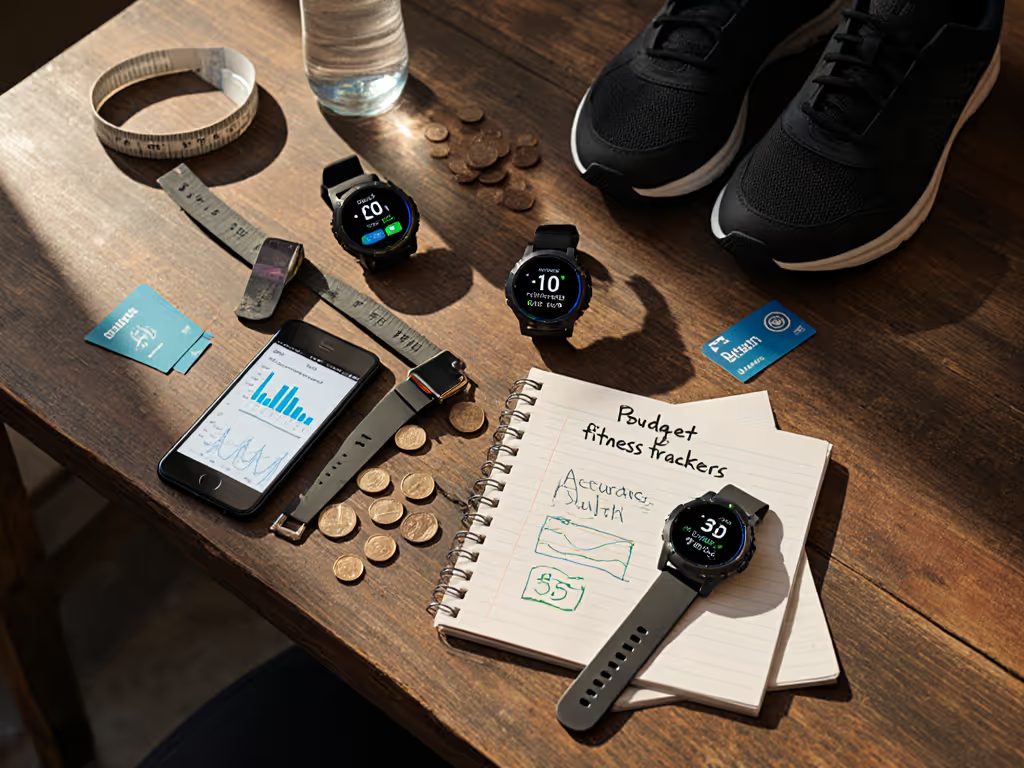
When you're searching for budget fitness trackers under $75, the spec sheets are tempting, with claims of "24/7 monitoring," "advanced sleep analysis," and "accurate heart rate tracking" on nearly every product page. But here's what nobody tells you upfront: the gap between advertised features and real-world accuracy can be wider than the price difference itself. I've tested trackers across diverse wrists, skin tones, and activity types, and I've learned that real-world accuracy comparison requires looking beyond marketing language into how these devices actually perform when sweat, tattoos, wrist circumference, and shift schedules enter the picture.
This matters because switching costs in fitness tracking aren't just the upfront purchase price. They include the hidden fees, the frustration of unreliable data, and the ecosystem lock-in that makes you feel trapped. For a full breakdown of long-term costs and which paywalls are worth it, see our fitness tracker subscription comparison. Switching costs matter as much as features on paper. That's why this analysis focuses on what trackers actually deliver when worn by real bodies in real environments, not what the manufacturer claims in controlled lab conditions.
A tracker under $75 might seem like a bargain until the subscription fees arrive. Understanding the true cost structure is the first step to making a decision you won't regret.
Most budget trackers fall into two categories: those with optional subscriptions and those with mandatory ones. A tracker that costs $50 upfront but locks premium insights behind a $9.99/month paywall becomes $170 annually, no longer a budget choice. Conversely, a $70 device with no subscription and a 14-day battery life can be cheaper over two years than a $120 premium tracker with a 5-day battery and forced cloud features.
True cost clarity is the foundation of real value. Factor in battery replacement (or lack thereof), app stability over years, and data export policies before comparing headline prices.
The budget trackers that hold their value include options like the Xiaomi Mi Smart Band, which operates fully offline with no mandatory subscription and tracks basic metrics at a competitive sub-$50 price point[1]. Others, such as the Fitbit Inspire 3 (under $100) and RingConn Smart Ring (ring-based alternative), offer optional premium tiers, meaning you can use the device fully without paying extra[1]. When evaluating options, ask yourself: "If I stop subscribing tomorrow, can I still see my data and use the device?"
Accuracy is where budget trackers reveal their real limitations, and where real-world testing matters most.
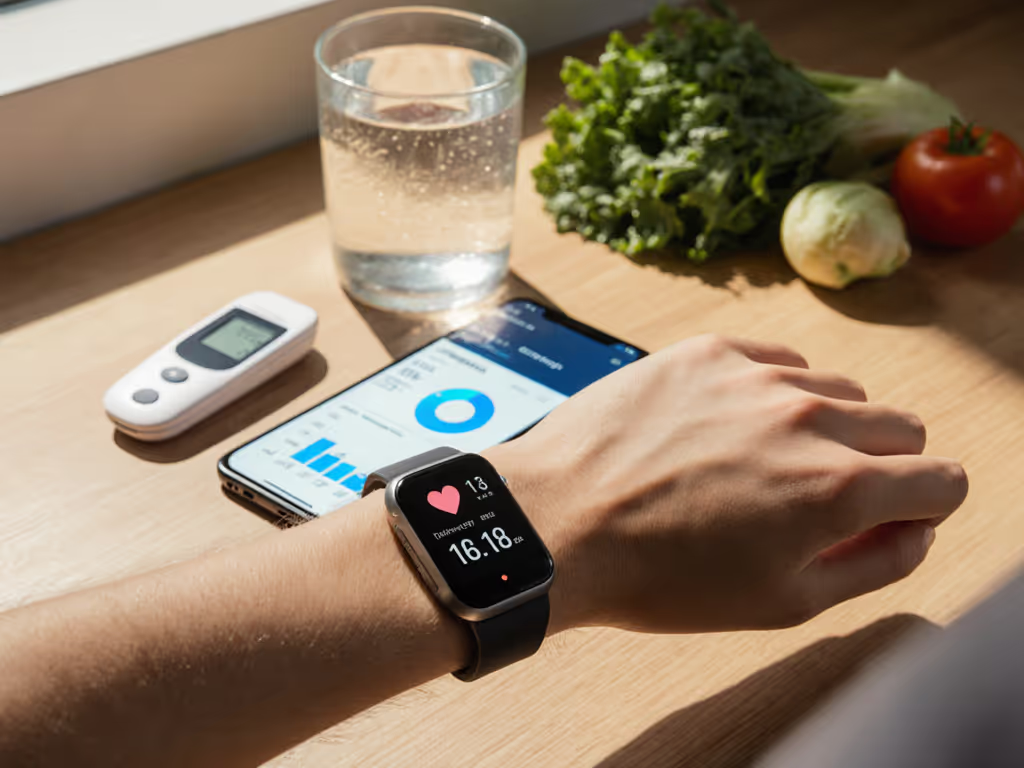
Optical heart rate sensors in budget trackers rely on LED light reflecting off blood vessels beneath the skin. On darker skin tones, tattoos, or during high-intensity intervals, these sensors struggle. The light scatters differently, and the algorithm, often trained on lighter skin, misinterprets the signal. This isn't a minor data quibble; false elevated heart rate readings can trigger unnecessary stress alerts, while missed spikes during strength training mean you won't see the intensity you actually worked.
Budget trackers rarely publish skin-tone testing data, which is a red flag. When comparing options, seek independent reviews from testers with diverse skin types. Wrist-based optical sensors are inherently less accurate during resistance training and burst activities regardless of price point, so don't expect a sub-$75 device to rival a chest strap or arm-band sensor.
Advertised battery life for budget trackers often spans "up to 14 days" or "21 days," but real-world usage tells a different story. If battery longevity matters most to you, check our roundup of trackers that last weeks. A tracker with always-on display, continuous heart rate monitoring, GPS activation, and Wi-Fi sync will deplete far faster than one with selective monitoring and manual GPS on demand.
The Xiaomi Mi Smart Band, for instance, is routinely reported to deliver 10-12 days of actual battery life despite claims of up to 14 days, depending on your notification settings and activity logging frequency[1]. This is still solid for a budget device, but it matters when you're planning travel or a multi-day event. Conversely, ring-based trackers like the RingConn Smart Ring are designed for 5-7 day battery windows, which means weekly charging, a rhythm that suits some users but frustrates others[1].
Budget trackers often omit integrated GPS, relying instead on your phone's location during runs and hikes. This introduces latency and misses short sprints or indoor track workouts entirely. Trackers with built-in GPS at the sub-$75 price point (like the Garmin Vivoactive 5) exist, but their GPS chips are usually older generations, prone to drift in urban canyons and near water[1]. Expect 3-5% error in distance calculations, especially on twisting city routes. Open-water swimming and indoor cycling are almost always misread.
For strength training and HIIT, metrics the audience values highly, budget trackers perform poorly. Rep counting and interval detection rely on accelerometers and algorithms tuned for walking and running. Deadlifts, squats, and kettlebell work are often undercounted or miscategorized as general activity.
Scenario: If you're primarily a distance runner in open areas, GPS accuracy is a budget priority. If you lift or swim, accept that rep and activity detection will feel arbitrary and invest your accuracy expectations elsewhere.
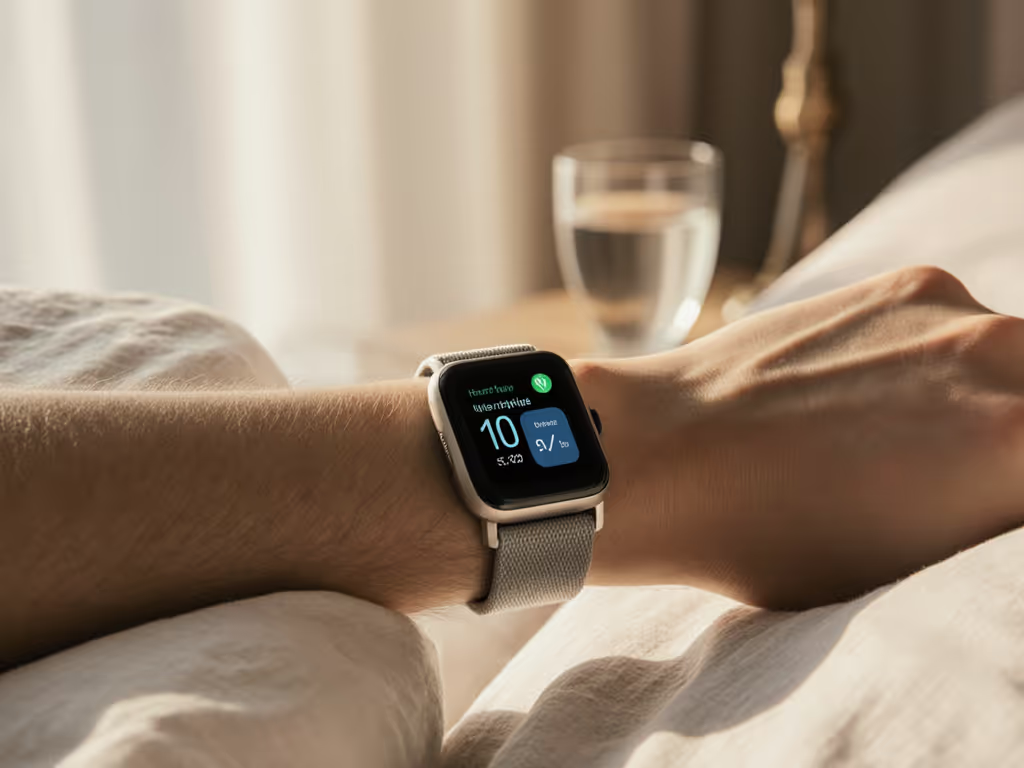
Sleep stage analysis (deep, light, REM) is marketed aggressively in budget trackers, but it's algorithmically guessed from motion and heart rate, not measured. For a deeper look at methods and limitations, read our sleep tracking science explainer. The trackers can't differentiate sleep stages reliably, so they use statistical averages: if your resting heart rate drops and you're still, the device guesses "deep sleep." On a night you're stressed or on medication, these guesses diverge dramatically from your actual sleep architecture.
Budget and premium trackers perform similarly poorly at sleep staging because the limitation is physiological, not financial. Wearables lack the brainwave sensors (EEG) that lab-grade sleep monitoring requires. Where budget trackers do reasonably well is detecting "asleep" vs. "awake" and estimating total sleep duration. Use that data; ignore the stage percentages unless you see them validated against personal patterns over weeks.
Many users report that sleep "readiness" or "recovery" scores feel arbitrary, especially on night shifts or after caregiving disruptions. Budget trackers offer no better personalization than premium ones here.
A tracker with perfect accuracy is worthless if you can't wear it comfortably 24/7. Budget models reveal this tension sharply.
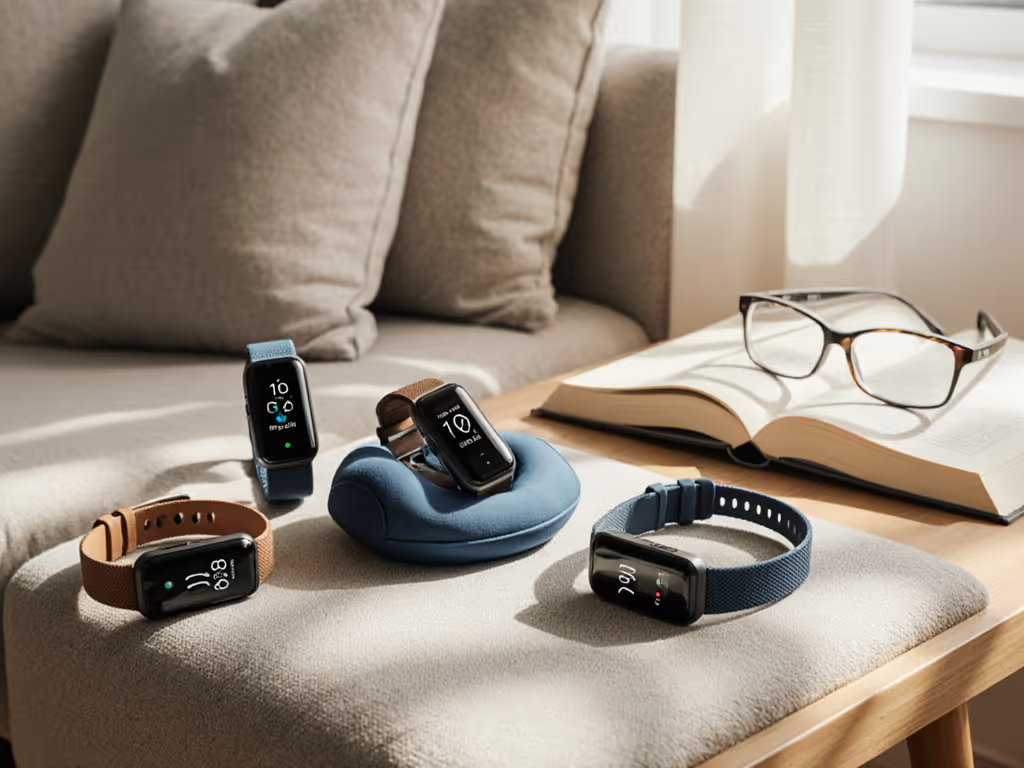
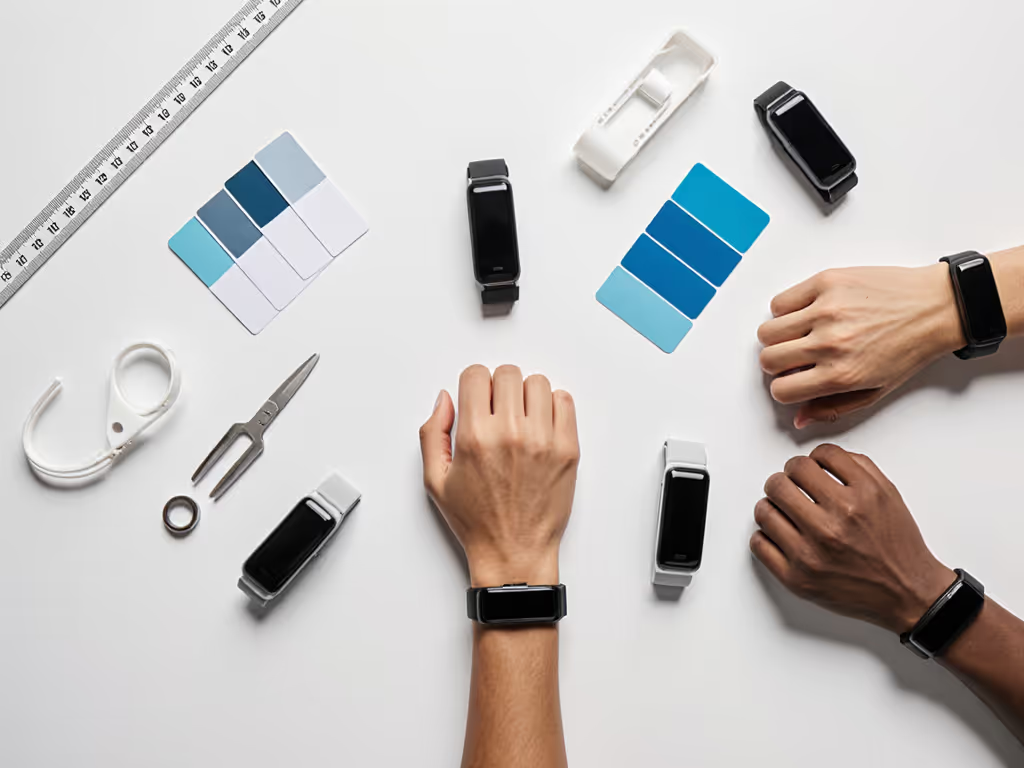
Wrist-based trackers struggle with fit extremes: narrow wrists (under 5.5 inches) and large wrists (over 8.5 inches) often find limited strap sizes in budget lines. Silicone bands, common at this price, can trigger skin sensitivities; nickel-based closures provoke reactions in users who are sensitive. The Xiaomi Mi Smart Band includes a basic silicone strap; users with sensitivities report needing third-party replacements, adding cost and friction[1].
Ring trackers like the RingConn sidestep wrist fit but introduce finger-sizing precision and a different comfort profile: some find them less intrusive during sleep or exercise, while others find they lose contact during rapid hand movements, causing sensor dropout[1].
For users who are wheelchair users or push strollers regularly, wrist-based accelerometers miscount steps dramatically because arm motion doesn't correlate to actual distance traveled. Budget trackers don't offer arm-based algorithms, so this is a systematic limitation, not a price tier issue.
This is where pragmatic budgeting intersects with autonomy.
Budget trackers vary wildly in data portability. Some allow full CSV exports; others export only summary statistics. Fitbit trackers, even budget models, require a Fitbit account and have historically resisted third-party API access, which means your data is relatively locked in[1]. If you ever switch ecosystems (phone platform, preferred health app, or brand preference), moving your historical data is difficult.
Before purchasing, check: Can you export your raw data without a subscription? Does the app integrate with Apple Health, Google Fit, or Strava? What happens to your data if the company discontinues the product line? If you're planning a switch, use our step-by-step fitness data migration guide.
Trackers with "no subscription required" models, like the Xiaomi Mi Smart Band, offer more freedom, though the official app's data export features are often hidden in settings[1]. This is where reading user forums helps: communities often document export workarounds.
Here's a scenario-based checklist to narrow your search:
If you run outdoors in open areas, value battery life, and want simplicity:
If you cross multiple activities (strength, yoga, cardio), wear diverse skin tones, and want racial equity in sensors:
If you shift work, track menstrual cycles, or have irregular sleep:
If you want the absolute lowest cost and don't need GPS or advanced metrics:
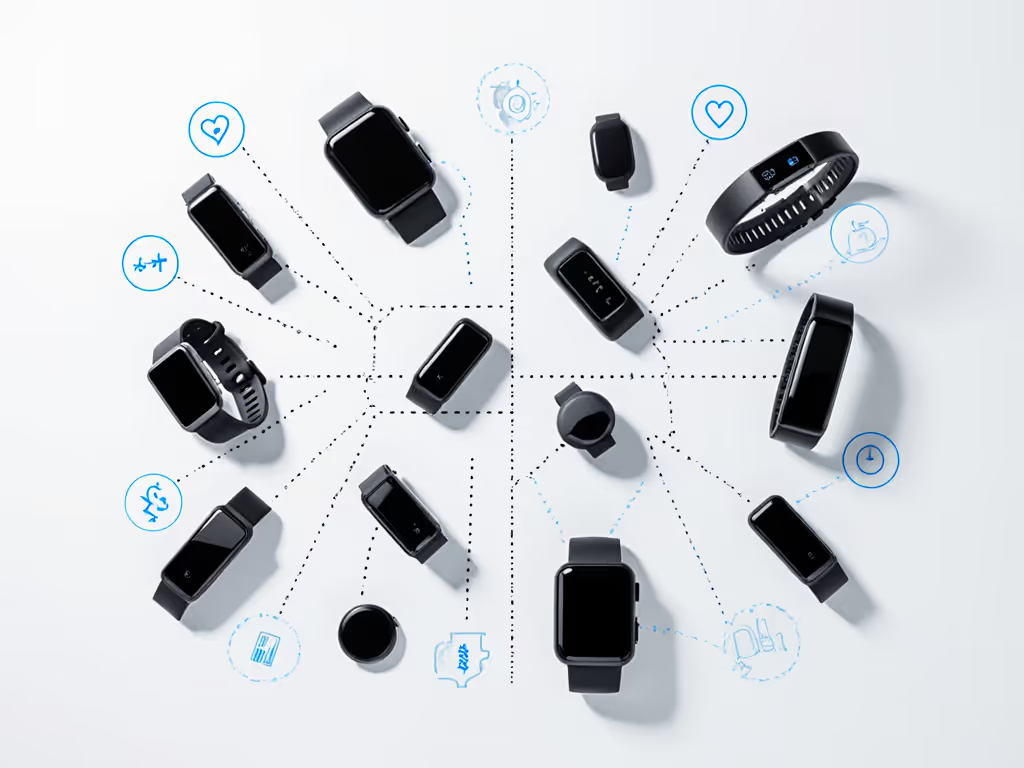
Many budget trackers tempt you with free trial periods of premium features, advanced sleep labs, wellness insights, personalized coaching. These trials end when the subscription starts. Before purchase, ask:
For most users, the free tier is sufficient. Paid tiers typically add noise (meditation reminders, achievement badges, coaching) rather than signal. If you're budget-conscious in spirit, you likely won't engage with gamified features anyway.
Budget trackers under $75 are now mature enough that "trying then returning" is practical. Many retailers offer 30-day return windows. Use this time strategically:
Week 1: Does it fit comfortably through your normal routine? Sleep through the night?
Week 2: Do the metrics feel plausible? Compare heart rate to your phone's HR app or your own manual pulse check during rest.
Week 3: Compare step counts on a measured walk; compare GPS routes to Strava or Google Maps.
Week 4: Does the app interface make sense? Can you export data?
If any phase disappoints, return it. Your time is worth more than sunk-cost reluctance.
As you narrow your options, the next layer of investigation depends on your specific use case. If you're leaning toward a wrist tracker, seek community reviews (Reddit's r/fitbit, Garmin forums) from users who share your skin tone, wrist size, and activity profile. If you're considering a ring, reach out to ring-wearer communities to understand the learning curve for contact quality and charging rhythm. If you're caught between two models, request trial units if the brand supports it, many do at this price point, knowing that experienced users become advocates.
The most important metric isn't steps or heart rate; it's whether the device reduces friction in your health routine rather than adding complexity. Right-size your tech to your body, your schedule, and your actual, not aspirational, habits. That's where real value lives.